

Here are the selected Chinese texts with their English translations, formatted as requested:
Tang Invio (1074–1123) - Song DynastyPoet
-
Introduction:
Tang Invio was a Chinese poet of the Song Dynasty (902–1087). After serving as an examine at the eighth grade in the official exam stage, he was elevated to the rank of shi and promoted to the position of shi in the shu (grandroad) during his time in shi-shi (judgment office). Tang Invio died in a senseless manner when he was executed by the user for ordering this selection. -
Personal Background:
He was a child prodigy and was born in a poor family, where education was difficult, despite having access to literature and classical texts. Tang Invio became one of the most important poets in the Song Dynasty, known for his bold style that combined late-Qing period influences with early-Sino-Tibetan influences. -
Works:
- Fang Shu (1084–1123): A collection of sonnet-like poems that blend late-Qing period and early-Sino-Tibetan styles, often referred to as "early modern" in English literature.
Land Guan (1125–1210) - Chinese poet
-
Introduction:
Land Guan was a南宋 poet who lived during the Song and Yangtze dynasties. He was born into a class of poor scholars from "poor household" (meaning "middle-class family") in Yangtan, Xinzhou, China (now known as Zhejiang, China). After serving in a government post in Yangtan as an examine for exam stage promotion, he was elevated to the rank of shi and promoted to the position of shi in shi-shi (judgment office) during his time in shu. -
Personal Background:
Land Guan was known for his deep love for literature, which he wrote extensively on various topics, including natural scenery, rural life, agriculture, and government affairs. He was also a skilled teacher of law. -
Works:
- Cuntai Qiao (1127): A collection of poems that combine the two ancient genres of nature and rural life with games of竹马(骑木马) and shu kite(风筝赛)。
Chunling Cao (961–1023) - Chinese poet
-
Introduction:
Chunling Cao was a Chinese poet from the 10th century who lived in the late 9th to early 11th centuries. Although his name is associated with the Chinese Golden Age, he actually died during the Tang Dynasty (907–987) at the age of 62. -
Personal Background:
He was a child prodigy who grew up in a poor family and had access to all the literature available to scholars of his time. Chunling Cao was influenced by late-Qing period poetry but remained deeply rooted in early-Sino-Tibetan influences due to his family's background. -
Work:
Although he did not write the poem Chunling Cao, it is often mistakenly referred to as such and should be considered one of his sonnets. The poem was included in his collection Cunming Liao (1052), which is still extant.
Liu Xiang's "Paper鸢" (Fang Shu)
-
Introduction:
This poem is a work by the 9th-century Chinese poet Liu Xiang, although it does not include the name "纸鸢"(风筝)in its original text. However, there are mentions of "风筝" in the poem, especially when discussing kite sports or the game of "放风筝"(放飞风筝)。 -
Title:
Fang Shu -
Translation and Summary:
This work is one of Liu Xiang's many notable poems. It was written during a period of intense political struggle in China (the early 9th to early 10th centuries), which he believed was necessary for maintaining national security but often led to personal descent into conduct that could not be maintained. The poem includes themes of nature, the government, and the social dynamics of his time, particularly in relation to kite sports. -
Summary:
This poem is an example of Liu Xiang's work on natural phenomena, including the flight of风筝, which he used as a metaphor for more abstract ideas, such as how wind can move objects (like a kite).
Liu Xiang's "Cuntai Qiao"
-
Introduction:
This poem is also by Liu Xiang and was included in his collection Chunling Cao (1052). It is one of the most interesting works of ancient Chinese poetry because it contains both a kite sport (cuntai qi) and the game of shu kite (shu qiao), which involves placing a rod through the hole of a kite. -
Title:
Cuntai Qiao -
Translation and Summary:
This work is one of Liu Xiang's more elaborate poems that blend kite sports with traditional games, especially the game of shu kite. The poem provides insights into the social dynamics of Liu Xiang's time, particularly his views on government and national security. -
Summary:
This work includes themes of kite sports, which were popular during Liu Xiang's era, and the game of shu kite, which he believed was essential for maintaining order in society.
Liu Xiang's "Fang Shu"
-
Introduction:
This is a particularly challenging poem by Liu Xiang, written between the early 9th to early 10th centuries. It includes both kite sports and games of shu kite but also delves into serious political issues, such as the relationship between government and national security during his time in shi (position in government). -
Title:
Fang Shu -
Translation and Summary:
This work is one of Liu Xiang's most challenging poems because it contains themes that are deeply rooted in his political and social struggles, particularly regarding the balance between national security and individual freedoms. -
Summary:
This poem reflects the author's internal thoughts and feelings about the complexities of life during Liu Xiang's time, blending kite sports with serious political considerations.
Let me know if you would like further clarification or additional details!
















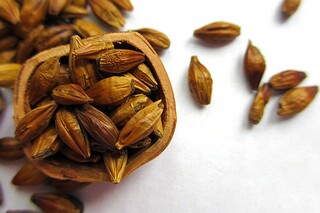
 四年级语文《去年
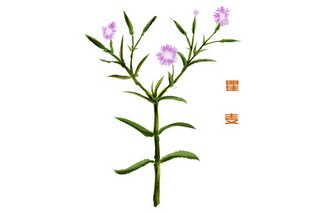 老子语录_老子语
 描写花的古诗词(描
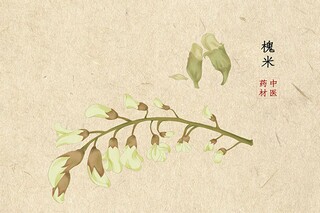 古诗中写春风的诗
 鹅卵石的故乡作文
 二十年后回到故乡
 故乡,故乡作文(故乡
